

Blog
The Art of Making a Vietnamese Lacquerware Tray
Vietnamese lacquerware tray is one of the country’s most treasured traditional crafts, admired for its glossy finish, durability, and cultural depth. Among its many forms, the lacquerware tray holds a special place. It is not only a practical household item but also a work of art that reflects centuries of craftsmanship and heritage. Creating such a piece requires patience, precision, and dedication, as artisans follow a meticulous process handed down through generations.
Preparing the Wooden Base for a Vietnamese Lacquerware Tray
The process begins with selecting a sturdy wooden base. The chosen wood is shaped into the desired form—whether round, rectangular, or oval—and then sanded smooth. Any cracks or imperfections are carefully filled with a natural mixture of sawdust and resin. This step ensures the foundation is strong, even, and ready to withstand the many layers of lacquer that will be applied.
Building Layers of Natural Lacquer on Vietnamese Lacquerware Tray
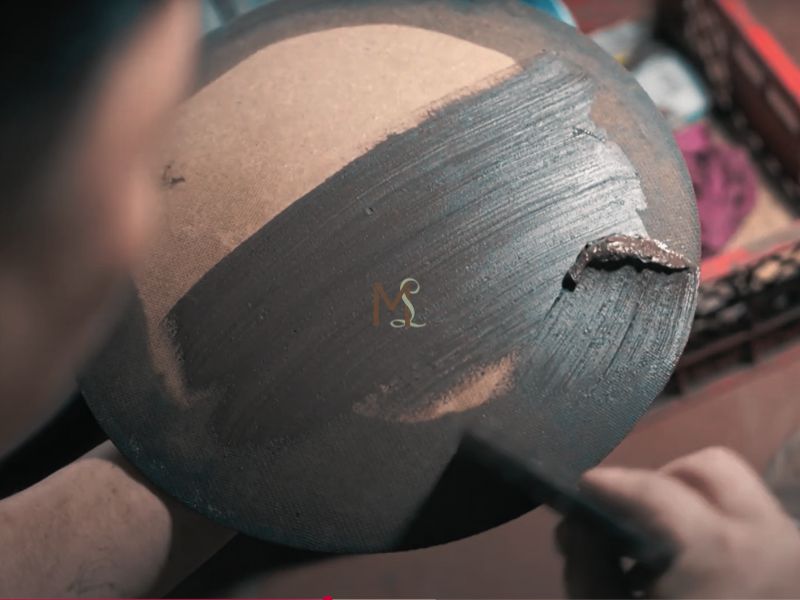

Lacquer is the soul of this craft. Made from the resin of the lacquer tree, it is applied in thin coats across the wooden surface. After each coat, the tray is dried slowly in a humid, dust-free room before being polished by hand. This process is repeated ten to fifteen times, resulting in a deep, lustrous black finish that is both waterproof and heat resistant. Each layer requires several days of patience, and the care invested at this stage defines the elegance and durability of the final piece.
Designing and Decorating the Vietnamese Lacquerware Tray
Once the lacquer base is complete, the tray becomes a canvas for artistic expression. Artisans sketch patterns inspired by nature, cultural symbols, or modern designs. These motifs then guide the intricate decoration, which may include mother-of-pearl inlay, eggshell inlay, or painting with natural pigments.
Mother-of-pearl, with its iridescent glow, is cut into delicate shapes and arranged with remarkable precision. Eggshells are placed piece by piece, forming subtle textures and backgrounds. This stage is painstaking, sometimes requiring weeks of careful work, but it gives each tray its unique charm and timeless beauty.
Painting, Gilding, and Sealing a Vietnamese Lacquerware Tray
To enhance the design, artisans apply natural pigments, gold, or silver leaf. Every detail is sealed with multiple coats of clear lacquer, which both protect the artwork and create a sense of depth. Each coat is dried, sanded, and polished before the next is applied, a process that preserves the brilliance of the decoration and ensures long-lasting quality.

Polishing and Finishing the Vietnamese Lacquerware Tray
The final step is polishing, a delicate process that uses charcoal powder, fine sand, and natural oils. This transforms the surface into a smooth, reflective finish, almost like glass. Every edge and corner is polished by hand, and the tray is carefully inspected to guarantee perfection. What emerges is not just a serving piece, but a true work of art—functional, durable, and culturally meaningful.

The Value of a Vietnamese Lacquerware Tray
A Vietnamese lacquerware tray embodies more than beauty. It is resistant to moisture, heat, and scratches, making it practical for everyday use. At the same time, each tray reflects hours of dedicated craftsmanship and carries the spirit of Vietnamese culture. No two trays are ever identical, as every piece is handmade and shaped by the artisan’s unique touch.
Vietnamese Lacquerware Production and Export
We specialize in producing and exporting high-quality Vietnamese lacquerware trays and handcrafted décor from Phu Xuyen. With traditional techniques combined with modern production capacity, we are able to supply both domestic and international markets. If you are looking for authentic lacquerware for wholesale, export, or partnership opportunities, contact us today for consultation and the best quotation.
- Tel/WhatsApp: (+84) 976.586.606
- Email: info@lacquerinlay.com